AI Coding With Local Llm

AI Coding With Local Llm — independent reviews, comparisons, pricing and step-by-step guides on Aizhi.

  • AI washing

    AI washing

    AI washing is a deceptive marketing tactic that consists of promoting a product or a service by overstating the role of artificial intelligence (AI) and the integration of it. Companies often involve in the practice to mislead customers to boost their offerings, and to secure funding from investors. The practice raises concerns regarding transparency, and legal issues. == Definition == AI washing is a deceptive marketing practice. It involves promoting a product or a service by overstating the role of artificial intelligence (AI) and its integration in the design and manufacture of the same. The practice raises concerns regarding transparency, compliance with security regulations, and consumer trust in the AI industry potentially hampering legitimate advancements in AI. The term was first defined by the AI Now Institute, a research institute based at New York University in 2019. The term is derived from greenwashing, another deceptive marketing technique that misrepresents a product's environmental impact in a similar manner. AI washing might involve a company claiming to have used AI in the development or enhancement of its products or services without its actual involvement, or using buzzwords such as "smart" or "AI-powered" without the product actually offering it or making use of it. A company may overstate the usage of AI or misuse the term, which is also construed as AI washing. In 2026, The Washington Post defined AI washing as "a trend for bosses to blame layoffs on the productive capabilities of AI and its ability to replace workers, even when job cuts may have little to do with the technology". == Usage and effects == AI washing can lead to deception of customers and misleading of investors. It is also an illegal and unethical practice that lacks transparency regarding disclosing the details of a product or a service. Companies get involved in such a practice often in response to competition who might have used AI in their offerings. It might also be used as a ploy to secure funding and investment, assuming that it will attract them towards it. AI washing has been compared to dot-com bubble, when businesses appended "dot-com" to the end of the business name to boost their valuation. In September 2023, Coca-Cola released a new product called Coca-Cola Y3000, and the company stated that the Y3000 flavor had been "co-created with human and artificial intelligence". The company was accused of AI washing due to no proof of AI involvement in the creation of the product, and critics believed that AI was used as a way to grab consumer attention more than it was used in the actual product creation. In 2026, mass tech layoffs were attributed to AI washing from AI innovation instead of balance sheet restructuring. == Mitigation == Companies are expected to be transparent and clearer in communicating the usage of AI in their products or services. Consumers can mitigate the same by requesting for hard evidence from the companies regarding the usage of AI tools. Customers should evaluate the product or service as a whole rather than being swayed by the usage of AI. Informed decision making and purchasing can keep them from falling for such marketing gimmicks. The United States Securities and Exchange Commission (SEC) imposes penalties for companies indulging in such practices. In March 2024, the SEC imposed the first civil penalties on two companies for misleading statements about their use of AI, and in July 2024, it charged a corporate executive from a supposed AI hiring startup with fraud for the usage of buzzwords related to AI.

    Read more →
  • Intelligent database

    Intelligent database

    Until the 1980s, databases were viewed as computer systems that stored record-oriented and business data such as manufacturing inventories, bank records, and sales transactions. A database system was not expected to merge numeric data with text, images, or multimedia information, nor was it expected to automatically notice patterns in the data it stored. In the late 1980s the concept of an intelligent database was put forward as a system that manages information (rather than data) in a way that appears natural to users and which goes beyond simple record keeping. The term was introduced in 1989 by the book Intelligent Databases by Kamran Parsaye, Mark Chignell, Setrag Khoshafian and Harry Wong. The concept postulated three levels of intelligence for such systems: high level tools, the user interface and the database engine. The high level tools manage data quality and automatically discover relevant patterns in the data with a process called data mining. This layer often relies on the use of artificial intelligence techniques. The user interface uses hypermedia in a form that uniformly manages text, images and numeric data. The intelligent database engine supports the other two layers, often merging relational database techniques with object orientation. In the twenty-first century, intelligent databases have now become widespread, e.g. hospital databases can now call up patient histories consisting of charts, text and x-ray images just with a few mouse clicks, and many corporate databases include decision support tools based on sales pattern analysis.

    Read more →
  • Autonomic networking

    Autonomic networking

    Autonomic networking follows the concept of Autonomic Computing, an initiative started by IBM in 2001. Its ultimate aim is to create self-managing networks to overcome the rapidly growing complexity of the Internet and other networks and to enable their further growth, far beyond the size of today. == Increasing size and complexity == The ever-growing management complexity of the Internet caused by its rapid growth is seen by some experts as a major problem that limits its usability in the future. What's more, increasingly popular smartphones, PDAs, networked audio and video equipment, and game consoles need to be interconnected. Pervasive Computing not only adds features, but also burdens existing networking infrastructure with more and more tasks that sooner or later will not be manageable by human intervention alone. Another important aspect is the price of manually controlling huge numbers of vitally important devices of current network infrastructures. == Autonomic nervous system == The autonomic nervous system (ANS) is the part of complex biological nervous systems that is not consciously controlled. It regulates bodily functions and the activity of specific organs. As proposed by IBM, future communication systems might be designed in a similar way to the ANS. == Components of autonomic networking == As autonomics conceptually derives from biological entities such as the human autonomic nervous system, each of the areas can be metaphorically related to functional and structural aspects of a living being. In the human body, the autonomic system facilitates and regulates a variety of functions including respiration, blood pressure and circulation, and emotive response. The autonomic nervous system is the interconnecting fabric that supports feedback loops between internal states and various sources by which internal and external conditions are monitored. === Autognostics === Autognostics includes a range of self-discovery, awareness, and analysis capabilities that provide the autonomic system with a view on high-level state. In metaphor, this represents the perceptual sub-systems that gather, analyze, and report on internal and external states and conditions – for example, this might be viewed as the eyes, visual cortex and perceptual organs of the system. Autognostics, or literally "self-knowledge", provides the autonomic system with a basis for response and validation. A rich autognostic capability may include many different "perceptual senses". For example, the human body gathers information via the usual five senses, the so-called sixth sense of proprioception (sense of body position and orientation), and through emotive states that represent the gross wellness of the body. As conditions and states change, they are detected by the sensory monitors and provide the basis for adaptation of related systems. Implicit in such a system are imbedded models of both internal and external environments such that relative value can be assigned to any perceived state - perceived physical threat (e.g. a snake) can result in rapid shallow breathing related to fight-flight response, a phylogenetically effective model of interaction with recognizable threats. In the case of autonomic networking, the state of the network may be defined by inputs from: individual network elements such as switches and network interfaces including specification and configuration historical records and current state traffic flows end-hosts application performance data logical diagrams and design specifications Most of these sources represent relatively raw and unprocessed views that have limited relevance. Post-processing and various forms of analysis must be applied to generate meaningful measurements and assessments against which current state can be derived. The autognostic system interoperates with: configuration management - to control network elements and interfaces policy management - to define performance objectives and constraints autodefense - to identify attacks and accommodate the impact of defensive responses === Configuration management === Configuration management is responsible for the interaction with network elements and interfaces. It includes an accounting capability with historical perspective that provides for the tracking of configurations over time, with respect to various circumstances. In the biological metaphor, these are the hands and, to some degree, the memory of the autonomic system. On a network, remediation and provisioning are applied via configuration setting of specific devices. Implementation affecting access and selective performance with respect to role and relationship are also applied. Almost all the "actions" that are currently taken by human engineers fall under this area. With only a few exceptions, interfaces are set by hand, or by extension of the hand, through automated scripts. Implicit in the configuration process is the maintenance of a dynamic population of devices under management, a historical record of changes and the directives which invoked change. Typical to many accounting functions, configuration management should be capable of operating on devices and then rolling back changes to recover previous configurations. Where change may lead to unrecoverable states, the sub-system should be able to qualify the consequences of changes prior to issuing them. As directives for change must originate from other sub-systems, the shared language for such directives must be abstracted from the details of the devices involved. The configuration management sub-system must be able to translate unambiguously between directives and hard actions or to be able to signal the need for further detail on a directive. An inferential capacity may be appropriate to support sufficient flexibility (i.e. configuration never takes place because there is no unique one-to-one mapping between directive and configuration settings). Where standards are not sufficient, a learning capacity may also be required to acquire new knowledge of devices and their configuration. Configuration management interoperates with all of the other sub-systems including: autognostics - receives direction for and validation of changes policy management - implements policy models through mapping to underlying resources security - applies access and authorization constraints for particular policy targets autodefense - receives direction for changes === Policy management === Policy management includes policy specification, deployment, reasoning over policies, updating and maintaining policies, and enforcement. Policy-based management is required for: constraining different kinds of behavior including security, privacy, resource access, and collaboration configuration management describing business processes and defining performance defining role and relationship, and establishing trust and reputation It provides the models of environment and behavior that represent effective interaction according to specific goals. In the human nervous system metaphor, these models are implicit in the evolutionary "design" of biological entities and specific to the goals of survival and procreation. Definition of what constitutes a policy is necessary to consider what is involved in managing it. A relatively flexible and abstract framework of values, relationships, roles, interactions, resources, and other components of the network environment is required. This sub-system extends far beyond the physical network to the applications in use and the processes and end-users that employ the network to achieve specific goals. It must express the relative values of various resources, outcomes, and processes and include a basis for assessing states and conditions. Unless embodied in some system outside the autonomic network or implicit to the specific policy implementation, the framework must also accommodate the definition of process, objectives and goals. Business process definitions and descriptions are then an integral part of the policy implementation. Further, as policy management represents the ultimate basis for the operation of the autonomic system, it must be able to report on its operation with respect to the details of its implementation. The policy management sub-system interoperates (at least) indirectly with all other sub-systems but primarily interacts with: autognostics - providing the definition of performance and accepting reports on conditions configuration management - providing constraints on device configuration security - providing definitions of roles, access and permissions === Autodefense === Autodefense represents a dynamic and adaptive mechanism that responds to malicious and intentional attacks on the network infrastructure, or use of the network infrastructure to attack IT resources. As defensive measures tend to impede the operation of IT, it is optimally capable of balancing performance objectives with typically over-riding threat management actions. In the

    Read more →
  • Label noise

    Label noise

    Label noise refers to errors or inaccuracies in the class labels of data instances. This is a widespread issue in machine learning datasets, arising from human annotator mistakes, unclear labeling instructions, automated labeling methods, or adversarial attacks in supervised learning. Label noise can be roughly divided into random noise, where labels are flipped independently of input features, and systematic noise, where mislabeling is dependent on certain patterns or biases in the data. Label noise can be damaging to model performance, especially for complex models that may overfit to noisy labels rather than generalizable patterns. Many approaches have been proposed to deal with the effects of label noise, including robust loss functions, noise-tolerant algorithms, data cleaning methods, and semi-supervised learning approaches. To reduce the impact of wrong labels during training, techniques like label smoothing, sample reweighting and using trusted validation sets are used. The role of noise-robust training paradigms and curriculum learning strategies to improve resilience against mislabeled data is also explored in recent research.

    Read more →
  • Artificial intelligence and elections

    Artificial intelligence and elections

    As artificial intelligence (AI) has become more mainstream, there is growing concern about how this will influence elections. Potential targets of AI include election processes, election offices, election officials and election vendors. There are also global efforts to improve elections using AI. == Tactics == Generative AI capabilities allow creation of misleading content. Examples of this include text-to-video, deepfake videos, text-to-image, AI-altered images, text-to-speech, voice cloning, and text-to-text. In the context of an election, a deepfake video of a candidate may propagate information that the candidate does not endorse. Chatbots could spread misinformation related to election locations, times or voting methods. In contrast to malicious actors in the past, these techniques require little technical skill and can spread rapidly. LLM-generated messages have the capacity to persuade humans on political issues. Researchers have begun to investigate how people rate messages that LLMs generate for how persuasive they are. When it came to policy issues, the LLM-generated messages received a 2.91 compared to a 2.80 when it came to smartness between the AI and humans. The LLM-generated messages were often more technical and analytical than human-generated messages. Generative AI has been used to micro-target people during tight political elections. The generation of targeted large language models has triggered concern that they will be used to leverage readily scale microtargeting. Rephrasing inputs have been used to generate fraudulent emails and phishing websites. Rephrasing inputs in a microtargeting does not violate the terms of OpenAI usage. There are no safeguards to prevent the use of rephrasing and creation of fraudulent emails. Political campaign managers have access to this allowing for them to create targeted content. == Usage by country == === Argentina === ==== 2023 elections ==== During the 2023 Argentine primary elections, Javier Milei's team distributed AI generated images including a fabricated image of his rival Sergio Massa and drew 3 million views. The team also created an unofficial Instagram account entitled "AI for the Homeland." Sergio Massa's team also distributed AI generated images and videos. === Bangladesh === ==== 2024 elections ==== In the run up to the 2024 Bangladeshi general election, deepfake videos of female opposition politicians appeared. Rumin Farhana was pictured in a bikini while Nipun Ray was shown in a swimming pool. === Canada === ==== 2025 elections ==== In the run up to the 2025 Canadian federal election, the use of AI tools is likely to figure prominently. India, Pakistan and Iran are all expected to make efforts to subvert the national vote using disinformation campaigns to deceive voters and sway diaspora communities. In a report by the Canadian Centre for Cyber Security called "Cyber Threats to Canada's Democratic Process: 2025 Update", it states that malicious actors including China and Russia: "are most likely to use generative AI as a means of creating and spreading disinformation, designed to sow division among Canadians and push narratives conducive to the interests of foreign states". === France === ==== 2024 elections ==== In the 2024 French legislative election, deepfake videos appeared claiming: i) That they showed the family of Marine le Pen. In the videos, young women, supposedly Le Pen's nieces, are seen skiing, dancing and at the beach "while making fun of France’s racial minorities": However, the family members don't exist. On social media there were over 2 million views. ii) In a video seen on social media, a deepfake video of a France24 broadcast appeared to report that the Ukrainian leadership had "tried to lure French president Emmanuel Macron to Ukraine to assassinate him and then blame his death on Russia". === Ghana === ==== 2024 elections ==== During the months before the December 2024 Ghanaian general election, a network of at least 171 fake accounts has been used to spam social media. Posts have been used by a group identified as "@TheTPatriots" to promote the New Patriotic Party, although it is not known whether the two are connected. All the networks' posts were "highly likely" to have been generated by ChatGPT and appear to be the "first secretly partisan network using AI to influence elections in Ghana". The opposition National Democratic Congress was also criticized with its leader John Mahama being called a drunkard. === India === ==== 2024 elections ==== In the 2024 Indian general election, politicians used deepfakes in their campaign materials. These deepfakes included politicians who had died prior to the election. Mathuvel Karunanidhi's party posted with his likeness even though he had died 2018. A video The All-India Anna Dravidian Progressive Federation party posted showed an audio clip of Jayaram Jayalalithaa even though she had died in 2016. The Deepfakes Analysis Unit (DAU) is an open source platform created in March 2024 for the public to share misleading content and assess if it had been AI-generated. AI was also used to translate political speeches in real time. This translating ability was widely used to reach more voters. === Indonesia === ==== 2024 elections ==== In the 2024 Indonesian presidential election, Prabowo Subianto made extensive use of AI-generated art in his campaign, which ranged from images of himself as an adorable child to various child portrayals in his advertisements. The Indonesian Children's Protection Commission condemned these ads, labeling them as a form of misuse. Other candidates, Anies Baswedan and Ganjar Pranowo, also incorporated AI art into their campaigns. Throughout the election period, all presidential candidates faced attacks from deepfakes, both in video and audio formats. === Ireland === ==== 2024 elections ==== In the last weeks of the 2024 Irish general election a spoof election poster appeared in Dublin featuring "an AI-generated candidate with three arms". The candidate is called Aidan Irwin, but no-one stood in the election with that name. A slogan on the poster says "put matters into artificial intelligence’s hands". The convincing election poster shows a man that "has six fingers on one hand, three arms, and a distorted thumb". === New Zealand === ==== 2023 elections ==== In May 2023, ahead of the 2023 New Zealand general election in October 2023, the New Zealand National Party published a "series of AI-generated political advertisements" on its Instagram account. After confirming that the images were faked, a party spokesperson said that it was "an innovative way to drive our social media". === Pakistan === ==== 2024 elections ==== AI has been used by the imprisoned ex-Prime Minister Imran Khan and his media team in the 2024 Pakistani general election: i) An AI generated audio of his voice was added to a video clip and was broadcast at a virtual rally. ii) An op-ed in The Economist written by Khan was later claimed by himself to have been written by AI which was later denied by his team. The article was liked and shared on social media by thousands of users. === South Africa === ==== 2024 elections ==== In the 2024 South African general election, there were several uses of AI content: i) A deepfaked video of Joe Biden emerged on social media showing him saying that "The U.S. would place sanctions on SA and declare it an enemy state if the African National Congress (ANC) won". ii) In a deepfake video, Donald Trump was shown endorsing the uMkhonto weSizwe party. It was posted to social media and was viewed more than 158,000 times. iii) Less than 3 months before the elections, a deepfake video showed U.S. rapper Eminem endorsing the Economic Freedom Fighters party while criticizing the ANC. The deepfake was viewed on social media more than 173,000 times. === South Korea === ==== 2022 elections ==== In the 2022 South Korean presidential election, a committee for one presidential candidate Yoon Suk Yeol released an AI avatar 'Al Yoon Seok-yeol' that would campaign in places the candidate could not go. The other presidential candidate Lee Jae-myung introduced a chatbot that provided information about the candidate's pledges. ==== 2024 elections ==== Deepfakes were used to spread misinformation before the 2024 South Korean legislative election with one source reporting 129 deepfake violations of election laws within a two week period. Seoul hosted the 2024 Summit for Democracy, a virtual gathering of world leaders initiated by US President Joe Biden in 2021. The focus of the summit was on digital threats to democracy including artificial intelligence and deepfakes. === Taiwan === ==== 2024 elections ==== AI-generated content was used during the 2024 Taiwanese presidential election. Among the media were: i) A deepfake video of General Secretary of the Chinese Communist Party Xi Jinping which showed him supporting the presidential elections. Created on social media, the video was "widely circulated

    Read more →
  • Agent verification

    Agent verification

    Agent verification is activity to gain assurances that purposeful artificial constructs act in accordance with their specifications. While primitive forms of inorganic agents have been used in manufacturing for centuries, the study of artificial agents did not begin until the mid 20th century. Foundational work on such agents was closely bound with the emergence of artificial intelligence as an academic discipline. Early agents deployed for industrial control systems and in computing were often controlled by quite simple logic however, not involving artificial intelligence as such. When deployed as part of a multi-agent system, even such simple agents could require special agent orientated testing methods, as their collective behaviour was challenging to verify with traditional testing techniques. Difficulties in providing assurances that agents will not behave in dangerous ways became more prevalent after the introduction of LLM agents, especially after the rapid acceleration of their deployment in 2025. The verification of agent behaviour can be conducted by formal or informal methods. Informal verification requires less mathematical skill. But when agents are part of systems where errors have significant risks — such as danger to human life, environmental damage or major financial loss — formal verification is preferred. Both regulators and system designers themselves like formal verification as it provides a high degree of mathematical certainty. It is not however always possible to formally test all aspects of an agent based system's behaviour, especially where newer LLM based agents are concerned, due in part to their high degree of autonomy. Accordingly, agent verification for low impact deployments might be carried out only with informal methods, while for high impact deployments, it may be performed with a mix of formal and informal techniques. == Terminology == In academia, the term agent verification is often defined to mean activity concerned with gaining assurance that the agent behaves in accordance with its specification - whether by processes such as testing or simulation. 'Verification' is typically contrasted with 'validation', the latter meaning activity concerned with checking that the specification itself meets user or real world needs. Such definitions are not universally adhered to however - for example, in some workplaces and documents, the words 'verification' and 'validation' can be used synonymously. Efforts to gain confidence in Agents have intensified sharply since 2025 due to the rapid roll out of LLM agents; different terms are sometimes used in the commercial sector. Here the term 'agent verification' can be used in the same sense as it is in academia, but sometimes the same activity can be covered by more ambiguous and wider ranging terms such as 'Agent governance' , 'Agent observability' or 'AI agent policing'. == History == === Classical agents === The theoretical underpinnings for artificial (inorganic) agents emerged in the mid 20th century, with establishment of cybernetics and artificial intelligence. Oliver Selfridge's 1958 Pandemonium - A Paradigm for Learning paper was an important early theoretical contribution in establishing agent oriented architecture. Practical implementations of agents for real world applications began to become widespread in the 1990s, after the introduction of the belief–desire–intention software model (BDI), and agent-oriented programming. Pure digital agents were deployed in computer infrastructure for purposes such as monitoring, while agents connected to real-world sensors and actuators were increasingly used in industrial control systems. While the concept of artificial agents was interwoven with early artificial intelligence studies right from the start, early agents lacked general purpose reasoning capabilities, often only having simple if then logic. Even a device as simple as a thermostat, which has a sensor and a means of acting, can be considered a proto agent in this sense. Verifying the behaviours of a simple single agent system is not generally especially difficult, but it can be a different matter when several simple agents coexist in the same system. Craig Reynolds's work on boids showed that relatively complex, "intelligent" behaviour can emerge from a number of such simple agents working together in a Multi-agent system (MAS). By the 1990s, even the behaviour of a single agent system could sometimes be quite complex; in accordance with the Belief–desire–intention software model, agents could have believes that might evolve over time. Agents were increasingly introduced that were controlled by quite large decision tree models, which had new vulnerabilities to adversarial attack. It was becoming increasingly apparent that traditional software verification methods had limitations for testing such agents, or even for the more primitive type of agents when they were deployed as part of a MAS. It was the use of agents for industrial control systems, sometimes associated with robotics, that lent urgency to the practice of agent verification. Informal testing might be acceptable for digital agents used say to monitor whether each of an organisation's computers are properly licensed. But with an increasing potential for faulty agents to result in a failure that might cause a large fire to break out at a chemical manufacturing plant, a botched medical operation, or even a crashed aircraft, the need to develop reliable means of verifying behaviour of such agents was considered urgent. The Foundation for Intelligent Physical Agents was established in 1996. From the late 90s, a growing number of industry and university based scientists began working on the problem, with researchers publishing papers on the verification of both single and multi agent systems. Much of this work showed how formal verification techniques like model checking could be used to gain a high level of assurance that agent based systems would conform with their specification. A 2018 systematic review covering 231 studies found that model checking was the most common technique for agent verification, with theorem proving the second most commonly used formal verification method. In the first two decades of the 20th century, agents run by AI became more common, with Siri and Alexa being well known examples. But such agents still lacked general reasoning capabilities and did not pose new pressing problems for agent verification. === General purpose reasoning agents === The advent of LLMs created huge potential for further use of artificial agents, as agents based on them could have general purpose cognitive abilities. Agents run by LLMs (and occasionally non-LLM foundation models) have similar vulnerability to adversarial attack as those run by decision tree models. The wider scope of actions for LLM agents has created new challenges for their verification, over and above those present for classical agents. For example, the LLM's neural network endows it with infinite domains, an especial challenge for traditional formal verification techniques. Academics began to study the problems involved in verifying LLM agents from 2018. Deployment of such agents began to accelerate in late 2023 after OpenAI's "function-calling" API was made available, and especially after Anthropic's late 2024 introduction of Model Context Protocol (MCP), a standardised way for LLM agents to gain contextual awareness, and to act on the world by calling various external tools. The rapid rollout of LLM agents following MCP's release has seen the task of agent verification receive increased attention within academia, and also from the private sector. In 2024 and 2025 several startups focusing on LLM agent verification have been founded in both Europe and the US to meet growing demand. == Approaches == === Formal verification === Formal verification involves proving the correctness of some or all aspects of a system using mathematical methods. Such methods can range from manual formal proof, to verification assisted with automated theorem provers like Isabelle. For agent verification, model checking is by far the most frequently used formal verification method; for pre-LLM models it was often complemented with techniques using computation tree logic. Another common method is theorem proving. Formal verification provides a higher degree of confidence than informal methods, but it is not always used, even when it is possible. Sometimes a person or organisation developing software agents won't have the necessary skills, or may not see it as worth the effort if the agent(s) will not have the ability to cause much harm even if they malfunction. When agents are deployed in systems where errors could have serious consequences, the ability of formal verification methods to provide mathematical certainty tends to be strongly preferred by both regulators and designers themselves. But even for high impact systems, formal verificatio

    Read more →
  • Rabbit r1

    Rabbit r1

    The Rabbit r1 is an artificial intelligence personal assistant device developed by the American technology startup Rabbit Inc and co-designed by Teenage Engineering. It was announced at the 2024 Consumer Electronics Show as a handheld device intended to perform digital tasks through voice commands, touch interaction, and web-based AI agents. The r1 was marketed around Rabbit's concept of a "large action model" (LAM), which the company described as software able to operate websites and services on behalf of users. The device runs rabbitOS, an operating system based on the Android Open Source Project. Its services have included AI search, image recognition, voice interaction, music playback, rideshare and food-ordering integrations, and later experimental web-agent features such as LAM Playground and teach mode. Initial reviews were largely negative, with reviewers criticizing the device's limited functionality, bugs, and unclear advantages over a smartphone. Critics also questioned Rabbit's claims after the r1 software was shown to run on an Android phone. Rabbit continued to issue software updates after launch, including rabbitOS 2 in September 2025, which introduced a redesigned card-based interface, gesture navigation, and a "creations" feature for generating small software tools and experiences on the device. Rabbit Inc was founded by Jesse Lyu Cheng. == Hardware == Display: A 2.88-inch touchscreen for interactive user input. Input: push-to-talk button to activate voice commands; scroll wheel; Gyroscope; Magnetometer; Accelerometer; GPS. Camera: 8 MP single camera, with a resolution of 3264x2448, allowing for the connected external AI to use computer vision. Audio: Equipped with a speaker and dual microphones for audio interaction. Connectivity: Supports Wi-Fi and cellular connections via a SIM card slot to access internet services. Processor: Runs on a 2.3GHz MediaTek Helio P35 processor. Memory: Contains 4GB of RAM for operational tasks. Storage: Offers 128GB of internal storage for data. Ports: Utilizes a USB-C port for charging and data connections. == Software == The Rabbit r1 runs rabbitOS, which is based on the Android Open Source Project (AOSP), specifically Android 13. Rabbit founder Jesse Lyu described rabbitOS as a "very bespoke AOSP" after reports that the r1's software could be run on a conventional Android phone. Rabbit described the r1 as using a large action model (LAM), a type of AI agent intended to perform tasks across software interfaces rather than only answer questions. At launch, the device supported a limited set of services, including AI search, vision features, music playback, and some third-party integrations. Perplexity.ai was one of the AI services used to answer user queries. In 2024, Rabbit released several software updates that added features and attempted to address early criticism of the device. In July 2024, the company launched "beta rabbit", an advanced search and conversation mode for more complex queries. In October 2024, it released LAM Playground, a web-based agent feature intended to let the r1 operate websites on behalf of users. Reviewers found the feature experimental; Android Authority reported that it could perform some navigation tasks but struggled with CAPTCHAs, loops, and unintended behavior. In November 2024, Rabbit introduced a beta "teach mode", which allowed users to demonstrate web-based tasks in the Rabbithole web portal and later ask the r1 to repeat them. The company described teach mode as experimental, and The Verge noted that Rabbit warned users that results could be unpredictable and that CAPTCHA-protected sites could cause problems. Rabbit released rabbitOS 2 in September 2025. The update redesigned the interface around a card-based layout, added additional touchscreen gestures, and introduced "creations", a feature that lets users generate simple software tools, games, and interfaces through natural-language prompts. Coverage of the update described it as a major software overhaul rather than new hardware. == Reception == === Funding === Rabbit raised $20 million in funding from Khosla Ventures, Synergis Capital and Kakao Investment in October 2023. The company announced an additional $10 million in funding in December 2023. === Sales === Following its announcement at the 2024 Consumer Electronics Show, 130,000 units were sold. On August 13, 2024, Rabbit announced that sales of r1 had expanded to the entire European Union (except Malta) and United Kingdom. On August 21, 2024, sales of r1 expanded to Singapore. === Reviews === The r1 was met with strong criticism immediately after Rabbit began shipping the device. Some reviews questioned what the device was able to do that a smartphone could not, while comparing it to the similar Humane Ai Pin. YouTuber Marques Brownlee called the device "barely reviewable". Android Authority's Mishaal Rahman managed to install Rabbit r1's software on a Pixel 6a smartphone, after a tipster shared an APK file. The Verge echoed the claims made by Rahman. In response, Lyu published statements confirming its use of Android, but denying that the r1 is an Android app. Mashable called its Vision features impressive, but said that "these praise-worthy features are overshadowed by buggy performance". Ars Technica wrote a blog post claiming "the company is blocking access from bootleg APKs". TechCrunch gave a slightly more positive review, calling the device a "fun peep at a possible future", but could not "advise anyone to buy one now." Shortly after the launch of r1, Rabbit began a weekly cadence of software updates to address much of the criticism from the early reviews, including "battery and GPS performance, time zone selection, and more". Digital Trends said the Magic Camera feature "takes the most mundane, ordinary, and badly composed photos and makes something fun and eye-catching from them." Mashable said the "beta rabbit" feature "makes Rabbit R1 more conversational and intelligent". Later coverage noted that Rabbit continued to update the r1 after its poorly received launch. The Verge reported in September 2024 that about 5,000 of roughly 100,000 purchasers were using the device at any given moment, citing Lyu, and described the product as having launched before it was ready. In 2025, coverage of rabbitOS 2 described the update as an attempt to reset the device's software experience after the criticism of its original release. == Controversies == === GAMA project === Rabbit Inc has garnered attention due to allegations surrounding its funding and the company's past projects. The company came under scrutiny when Stephen Findeisen, known as Coffeezilla on YouTube, published a video in May 2024, alleging that Rabbit Incorporation was "built on a scam". Rabbit Incorporation, initially named Cyber Manufacturing Co, rebranded just two months before launching the Rabbit R1. The company, under its former name, raised $6 million in November 2021 for a project called GAMA, described as a "Next Generation NFT Project." Jesse Lyu, the CEO of Rabbit Incorporation, referred to GAMA as a "fun little project." Coffeezilla, who investigates influencer scams, highlighted old Clubhouse recordings of Jesse Lyu discussing the GAMA project. In these recordings, Lyu emphasized the substantial funding behind GAMA and its potential to be a revolutionary, carbon-negative cryptocurrency. Coffeezilla questioned the whereabouts of the funds raised for GAMA, estimating that approximately $1 million in refunds to investors remained unresolved. He suggested that the rebranding to Rabbit Incorporation and the shift to developing the Rabbit R1 were attempts to divert from the GAMA project's issues. In response to Coffeezilla's inquiries, Rabbit Incorporation stated that the $6 million raised was used for the GAMA project. The company said that NFTs cannot be refunded unless the owner agrees to "burn" them on the blockchain. Rabbit Incorporation also said that the GAMA project was open-sourced and returned to the community, aligning with community feedback. They also mentioned that efforts to buy back NFTs were made to counteract malicious trading and maintain market stability. === Security === In June 2024, Engadget reported that the Rabbitude team, a community reverse engineering project, had gained access to the r1's codebase revealing that r1's software contained several hardcoded API keys in its code for ElevenLabs, Microsoft Azure, Yelp, and Google Maps, potentially allowing unauthorized access to r1 responses, including those containing the users' personal information. For a short time, Rabbit immediately began revoking and rotating those secrets and confirmed that the code was leaked by an employee who had "been terminated and remains under investigation". In July 2024, the company revealed that all user chats and device pairing data were logged on the r1 with no ability to delete them. This meant that lost or stolen devices could be used to extract user

    Read more →
  • Artificial intelligence of things

    Artificial intelligence of things

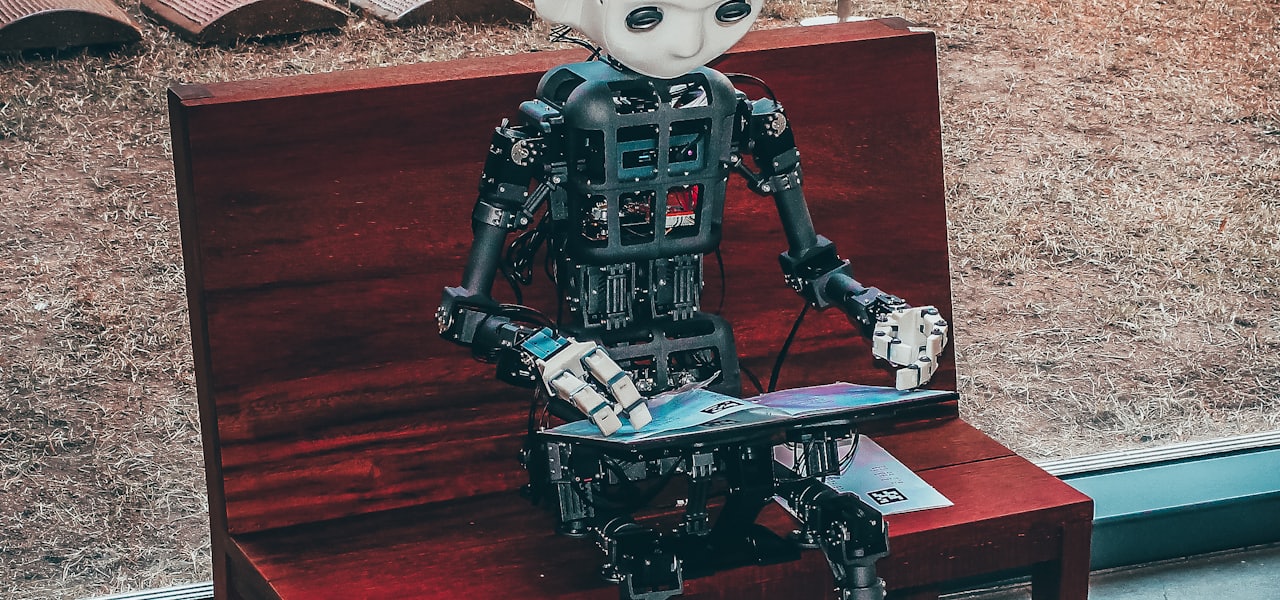
    Artificial Intelligence of Things (AIoT) is the combination of artificial intelligence (AI) technologies with the Internet of things (IoT) infrastructure to create systems capable of sensing, learning, and acting on data without continuous human intervention. While IoT focuses on connectivity and sensor data collection, AI enables IoT devices to analyse data in real time and produce actionable outputs, including automated decisions at the edge. == Applications == === Manufacturing and predictive maintenance === Manufacturing accounts for the largest share of AIoT adoption by industry vertical. A common application is predictive maintenance, where sensors measuring vibration, temperature, current draw, and acoustic emissions feed machine learning models trained to detect signatures that precede equipment failure. These systems can flag developing faults weeks or months in advance, and in more advanced deployments can autonomously adjust machine parameters such as motor speed or cooling cycles to delay or prevent failure. === Other industries === In healthcare, AIoT enables remote patient monitoring through wearable devices that collect vital signs and apply AI models to detect anomalies or predict deterioration. In logistics, GPS and telematics sensors combined with AI models support real-time route optimisation, vehicle maintenance prediction, and fuel cost forecasting. Smart building systems use occupancy, temperature, and energy sensors with AI to dynamically adjust HVAC and lighting, reducing energy consumption. == Architecture == AIoT systems typically operate across three layers: a device layer of sensors and actuators that collect data, a connectivity layer that transmits data via protocols such as MQTT or HTTP, and a compute layer where AI models process the data either in the cloud or at the edge. The trend toward edge-based processing, where inference runs on low-cost processors near the data source rather than in a centralised cloud, has accelerated as hardware costs have fallen and applications increasingly require sub-second response times. == Market == Market sizing estimates for AIoT vary significantly depending on scope and definition. Fortune Business Insights valued the AIoT market at USD 35.65 billion in 2023, projecting growth to USD 253.86 billion by 2030 at a compound annual growth rate of 32.4%. Grand View Research estimated the broader market at USD 171.4 billion in 2024 with a CAGR of 31.7% through 2030, reflecting a wider definition that includes AI-integrated hardware components. North America accounted for approximately 40% of global market share in 2024, with the Asia-Pacific region projected as the fastest-growing market.

    Read more →
  • Albert One

    Albert One

    Albert One is an artificial intelligence chatbot created by Robby Garner and designed to mimic the way humans make conversations using a multi-faceted approach in natural language programming. == History == In both 1998 and 1999, Albert One won the Loebner Prize Contest, a competition between chatterbots. Some parts of Albert were deployed on the internet beginning in 1995, to gather information about what kinds of things people would say to a chatterbot. Another element of Albert One involved the building of a large database of human statements, and associated replies. This portion of the project was tested at the 1994-1997 Loebner Prize contests. Albert was the first of Robby Garner's multifaceted bots. The Albert One system was composed of several subsystems. Among those were a version of Eliza, the therapist, Elivs, another Eliza-like bot, and several other helper applications working together in a hierarchical arrangement. As a continuation of the stimulus-response library, various other database queries and assertions were tested to arrive at each of Albert's responses. Robby went on to develop networked examples of this kind of hierarchical "glue" at The Turing Hub.

    Read more →
  • Conditional random field

    Conditional random field

    Conditional random fields (CRFs) are a class of statistical modeling methods often applied in pattern recognition and machine learning and used for structured prediction. Whereas a classifier predicts a label for a single sample without considering "neighbouring" samples, a CRF can take context into account. To do so, the predictions are modelled as a graphical model, which represents the presence of dependencies between the predictions. The kind of graph used depends on the application. For example, in natural language processing, "linear chain" CRFs are popular, for which each prediction is dependent only on its immediate neighbours. In image processing, the graph typically connects locations to nearby and/or similar locations to enforce that they receive similar predictions. Other examples where CRFs are used are: labeling or parsing of sequential data for natural language processing or biological sequences, part-of-speech tagging, shallow parsing, named entity recognition, gene finding, peptide critical functional region finding, and object recognition and image segmentation in computer vision. == Description == CRFs are a type of discriminative undirected probabilistic graphical model. Lafferty, McCallum and Pereira define a CRF on observations X {\displaystyle {\boldsymbol {X}}} and random variables Y {\displaystyle {\boldsymbol {Y}}} as follows: Let G = ( V , E ) {\displaystyle G=(V,E)} be a graph such that Y = ( Y v ) v ∈ V {\displaystyle {\boldsymbol {Y}}=({\boldsymbol {Y}}_{v})_{v\in V}} , so that Y {\displaystyle {\boldsymbol {Y}}} is indexed by the vertices of G {\displaystyle G} . Then ( X , Y ) {\displaystyle ({\boldsymbol {X}},{\boldsymbol {Y}})} is a conditional random field when each random variable Y v {\displaystyle {\boldsymbol {Y}}_{v}} , conditioned on X {\displaystyle {\boldsymbol {X}}} , obeys the Markov property with respect to the graph; that is, its probability is dependent only on its neighbours in G and not its past states: P ( Y v | X , { Y w : w ≠ v } ) = P ( Y v | X , { Y w : w ∼ v } ) {\displaystyle P({\boldsymbol {Y}}_{v}|{\boldsymbol {X}},\{{\boldsymbol {Y}}_{w}:w\neq v\})=P({\boldsymbol {Y}}_{v}|{\boldsymbol {X}},\{{\boldsymbol {Y}}_{w}:w\sim v\})} , where w ∼ v {\displaystyle {\mathit {w}}\sim v} means that w {\displaystyle w} and v {\displaystyle v} are neighbors in G {\displaystyle G} . What this means is that a CRF is an undirected graphical model whose nodes can be divided into exactly two disjoint sets X {\displaystyle {\boldsymbol {X}}} and Y {\displaystyle {\boldsymbol {Y}}} , the observed and output variables, respectively; the conditional distribution p ( Y | X ) {\displaystyle p({\boldsymbol {Y}}|{\boldsymbol {X}})} is then modeled. === Inference === For general graphs, the problem of exact inference in CRFs is intractable. The inference problem for a CRF is basically the same as for an MRF and the same arguments hold. However, there exist special cases for which exact inference is feasible: If the graph is a chain or a tree, message passing algorithms yield exact solutions. The algorithms used in these cases are analogous to the forward-backward and Viterbi algorithm for the case of HMMs. If the CRF only contains pair-wise potentials and the energy is submodular, combinatorial min cut/max flow algorithms yield exact solutions. If exact inference is impossible, several algorithms can be used to obtain approximate solutions. These include: Loopy belief propagation Alpha expansion Mean field inference Linear programming relaxations === Parameter learning === Learning the parameters θ {\displaystyle \theta } is usually done by maximum likelihood learning for p ( Y i | X i ; θ ) {\displaystyle p(Y_{i}|X_{i};\theta )} . If all nodes have exponential family distributions and all nodes are observed during training, this optimization is convex. It can be solved for example using gradient descent algorithms, or Quasi-Newton methods such as the L-BFGS algorithm. On the other hand, if some variables are unobserved, the inference problem has to be solved for these variables. Exact inference is intractable in general graphs, so approximations have to be used. === Examples === In sequence modeling, the graph of interest is usually a chain graph. An input sequence of observed variables X {\displaystyle X} represents a sequence of observations and Y {\displaystyle Y} represents a hidden (or unknown) state variable that needs to be inferred given the observations. The Y i {\displaystyle Y_{i}} are structured to form a chain, with an edge between each Y i − 1 {\displaystyle Y_{i-1}} and Y i {\displaystyle Y_{i}} . As well as having a simple interpretation of the Y i {\displaystyle Y_{i}} as "labels" for each element in the input sequence, this layout admits efficient algorithms for: model training, learning the conditional distributions between the Y i {\displaystyle Y_{i}} and feature functions from some corpus of training data. decoding, determining the probability of a given label sequence Y {\displaystyle Y} given X {\displaystyle X} . inference, determining the most likely label sequence Y {\displaystyle Y} given X {\displaystyle X} . The conditional dependency of each Y i {\displaystyle Y_{i}} on X {\displaystyle X} is defined through a fixed set of feature functions of the form f ( i , Y i − 1 , Y i , X ) {\displaystyle f(i,Y_{i-1},Y_{i},X)} , which can be thought of as measurements on the input sequence that partially determine the likelihood of each possible value for Y i {\displaystyle Y_{i}} . The model assigns each feature a numerical weight and combines them to determine the probability of a certain value for Y i {\displaystyle Y_{i}} . Linear-chain CRFs have many of the same applications as conceptually simpler hidden Markov models (HMMs), but relax certain assumptions about the input and output sequence distributions. An HMM can loosely be understood as a CRF with very specific feature functions that use constant probabilities to model state transitions and emissions. Conversely, a CRF can loosely be understood as a generalization of an HMM that makes the constant transition probabilities into arbitrary functions that vary across the positions in the sequence of hidden states, depending on the input sequence. Notably, in contrast to HMMs, CRFs can contain any number of feature functions, the feature functions can inspect the entire input sequence X {\displaystyle X} at any point during inference, and the range of the feature functions need not have a probabilistic interpretation. == Variants == === Higher-order CRFs and semi-Markov CRFs === CRFs can be extended into higher order models by making each Y i {\displaystyle Y_{i}} dependent on a fixed number k {\displaystyle k} of previous variables Y i − k , . . . , Y i − 1 {\displaystyle Y_{i-k},...,Y_{i-1}} . In conventional formulations of higher order CRFs, training and inference are only practical for small values of k {\displaystyle k} (such as k ≤ 5), since their computational cost increases exponentially with k {\displaystyle k} . However, another recent advance has managed to ameliorate these issues by leveraging concepts and tools from the field of Bayesian nonparametrics. Specifically, the CRF-infinity approach constitutes a CRF-type model that is capable of learning infinitely-long temporal dynamics in a scalable fashion. This is effected by introducing a novel potential function for CRFs that is based on the Sequence Memoizer (SM), a nonparametric Bayesian model for learning infinitely-long dynamics in sequential observations. To render such a model computationally tractable, CRF-infinity employs a mean-field approximation of the postulated novel potential functions (which are driven by an SM). This allows for devising efficient approximate training and inference algorithms for the model, without undermining its capability to capture and model temporal dependencies of arbitrary length. There exists another generalization of CRFs, the semi-Markov conditional random field (semi-CRF), which models variable-length segmentations of the label sequence Y {\displaystyle Y} . This provides much of the power of higher-order CRFs to model long-range dependencies of the Y i {\displaystyle Y_{i}} , at a reasonable computational cost. Finally, large-margin models for structured prediction, such as the structured Support Vector Machine can be seen as an alternative training procedure to CRFs. === Latent-dynamic conditional random field === Latent-dynamic conditional random fields (LDCRF) or discriminative probabilistic latent variable models (DPLVM) are a type of CRFs for sequence tagging tasks. They are latent variable models that are trained discriminatively. In an LDCRF, like in any sequence tagging task, given a sequence of observations x = x 1 , … , x n {\displaystyle x_{1},\dots ,x_{n}} , the main problem the model must solve is how to assign a sequence of labels y = y 1 , … , y n {\displaystyle y_{1},\dots ,y_{n}} from one finite set

    Read more →
  • Rabbit r1

    Rabbit r1

    The Rabbit r1 is an artificial intelligence personal assistant device developed by the American technology startup Rabbit Inc and co-designed by Teenage Engineering. It was announced at the 2024 Consumer Electronics Show as a handheld device intended to perform digital tasks through voice commands, touch interaction, and web-based AI agents. The r1 was marketed around Rabbit's concept of a "large action model" (LAM), which the company described as software able to operate websites and services on behalf of users. The device runs rabbitOS, an operating system based on the Android Open Source Project. Its services have included AI search, image recognition, voice interaction, music playback, rideshare and food-ordering integrations, and later experimental web-agent features such as LAM Playground and teach mode. Initial reviews were largely negative, with reviewers criticizing the device's limited functionality, bugs, and unclear advantages over a smartphone. Critics also questioned Rabbit's claims after the r1 software was shown to run on an Android phone. Rabbit continued to issue software updates after launch, including rabbitOS 2 in September 2025, which introduced a redesigned card-based interface, gesture navigation, and a "creations" feature for generating small software tools and experiences on the device. Rabbit Inc was founded by Jesse Lyu Cheng. == Hardware == Display: A 2.88-inch touchscreen for interactive user input. Input: push-to-talk button to activate voice commands; scroll wheel; Gyroscope; Magnetometer; Accelerometer; GPS. Camera: 8 MP single camera, with a resolution of 3264x2448, allowing for the connected external AI to use computer vision. Audio: Equipped with a speaker and dual microphones for audio interaction. Connectivity: Supports Wi-Fi and cellular connections via a SIM card slot to access internet services. Processor: Runs on a 2.3GHz MediaTek Helio P35 processor. Memory: Contains 4GB of RAM for operational tasks. Storage: Offers 128GB of internal storage for data. Ports: Utilizes a USB-C port for charging and data connections. == Software == The Rabbit r1 runs rabbitOS, which is based on the Android Open Source Project (AOSP), specifically Android 13. Rabbit founder Jesse Lyu described rabbitOS as a "very bespoke AOSP" after reports that the r1's software could be run on a conventional Android phone. Rabbit described the r1 as using a large action model (LAM), a type of AI agent intended to perform tasks across software interfaces rather than only answer questions. At launch, the device supported a limited set of services, including AI search, vision features, music playback, and some third-party integrations. Perplexity.ai was one of the AI services used to answer user queries. In 2024, Rabbit released several software updates that added features and attempted to address early criticism of the device. In July 2024, the company launched "beta rabbit", an advanced search and conversation mode for more complex queries. In October 2024, it released LAM Playground, a web-based agent feature intended to let the r1 operate websites on behalf of users. Reviewers found the feature experimental; Android Authority reported that it could perform some navigation tasks but struggled with CAPTCHAs, loops, and unintended behavior. In November 2024, Rabbit introduced a beta "teach mode", which allowed users to demonstrate web-based tasks in the Rabbithole web portal and later ask the r1 to repeat them. The company described teach mode as experimental, and The Verge noted that Rabbit warned users that results could be unpredictable and that CAPTCHA-protected sites could cause problems. Rabbit released rabbitOS 2 in September 2025. The update redesigned the interface around a card-based layout, added additional touchscreen gestures, and introduced "creations", a feature that lets users generate simple software tools, games, and interfaces through natural-language prompts. Coverage of the update described it as a major software overhaul rather than new hardware. == Reception == === Funding === Rabbit raised $20 million in funding from Khosla Ventures, Synergis Capital and Kakao Investment in October 2023. The company announced an additional $10 million in funding in December 2023. === Sales === Following its announcement at the 2024 Consumer Electronics Show, 130,000 units were sold. On August 13, 2024, Rabbit announced that sales of r1 had expanded to the entire European Union (except Malta) and United Kingdom. On August 21, 2024, sales of r1 expanded to Singapore. === Reviews === The r1 was met with strong criticism immediately after Rabbit began shipping the device. Some reviews questioned what the device was able to do that a smartphone could not, while comparing it to the similar Humane Ai Pin. YouTuber Marques Brownlee called the device "barely reviewable". Android Authority's Mishaal Rahman managed to install Rabbit r1's software on a Pixel 6a smartphone, after a tipster shared an APK file. The Verge echoed the claims made by Rahman. In response, Lyu published statements confirming its use of Android, but denying that the r1 is an Android app. Mashable called its Vision features impressive, but said that "these praise-worthy features are overshadowed by buggy performance". Ars Technica wrote a blog post claiming "the company is blocking access from bootleg APKs". TechCrunch gave a slightly more positive review, calling the device a "fun peep at a possible future", but could not "advise anyone to buy one now." Shortly after the launch of r1, Rabbit began a weekly cadence of software updates to address much of the criticism from the early reviews, including "battery and GPS performance, time zone selection, and more". Digital Trends said the Magic Camera feature "takes the most mundane, ordinary, and badly composed photos and makes something fun and eye-catching from them." Mashable said the "beta rabbit" feature "makes Rabbit R1 more conversational and intelligent". Later coverage noted that Rabbit continued to update the r1 after its poorly received launch. The Verge reported in September 2024 that about 5,000 of roughly 100,000 purchasers were using the device at any given moment, citing Lyu, and described the product as having launched before it was ready. In 2025, coverage of rabbitOS 2 described the update as an attempt to reset the device's software experience after the criticism of its original release. == Controversies == === GAMA project === Rabbit Inc has garnered attention due to allegations surrounding its funding and the company's past projects. The company came under scrutiny when Stephen Findeisen, known as Coffeezilla on YouTube, published a video in May 2024, alleging that Rabbit Incorporation was "built on a scam". Rabbit Incorporation, initially named Cyber Manufacturing Co, rebranded just two months before launching the Rabbit R1. The company, under its former name, raised $6 million in November 2021 for a project called GAMA, described as a "Next Generation NFT Project." Jesse Lyu, the CEO of Rabbit Incorporation, referred to GAMA as a "fun little project." Coffeezilla, who investigates influencer scams, highlighted old Clubhouse recordings of Jesse Lyu discussing the GAMA project. In these recordings, Lyu emphasized the substantial funding behind GAMA and its potential to be a revolutionary, carbon-negative cryptocurrency. Coffeezilla questioned the whereabouts of the funds raised for GAMA, estimating that approximately $1 million in refunds to investors remained unresolved. He suggested that the rebranding to Rabbit Incorporation and the shift to developing the Rabbit R1 were attempts to divert from the GAMA project's issues. In response to Coffeezilla's inquiries, Rabbit Incorporation stated that the $6 million raised was used for the GAMA project. The company said that NFTs cannot be refunded unless the owner agrees to "burn" them on the blockchain. Rabbit Incorporation also said that the GAMA project was open-sourced and returned to the community, aligning with community feedback. They also mentioned that efforts to buy back NFTs were made to counteract malicious trading and maintain market stability. === Security === In June 2024, Engadget reported that the Rabbitude team, a community reverse engineering project, had gained access to the r1's codebase revealing that r1's software contained several hardcoded API keys in its code for ElevenLabs, Microsoft Azure, Yelp, and Google Maps, potentially allowing unauthorized access to r1 responses, including those containing the users' personal information. For a short time, Rabbit immediately began revoking and rotating those secrets and confirmed that the code was leaked by an employee who had "been terminated and remains under investigation". In July 2024, the company revealed that all user chats and device pairing data were logged on the r1 with no ability to delete them. This meant that lost or stolen devices could be used to extract user

    Read more →
  • Instance selection

    Instance selection

    Instance selection (or dataset reduction, or dataset condensation) is an important data pre-processing step that can be applied in many machine learning (or data mining) tasks. Approaches for instance selection can be applied for reducing the original dataset to a manageable volume, leading to a reduction of the computational resources that are necessary for performing the learning process. Algorithms of instance selection can also be applied for removing noisy instances, before applying learning algorithms. This step can improve the accuracy in classification problems. Algorithm for instance selection should identify a subset of the total available data to achieve the original purpose of the data mining (or machine learning) application as if the whole data had been used. Considering this, the optimal outcome of IS would be the minimum data subset that can accomplish the same task with no performance loss, in comparison with the performance achieved when the task is performed using the whole available data. Therefore, every instance selection strategy should deal with a trade-off between the reduction rate of the dataset and the classification quality. == Instance selection algorithms == The literature provides several different algorithms for instance selection. They can be distinguished from each other according to several different criteria. Considering this, instance selection algorithms can be grouped in two main classes, according to what instances they select: algorithms that preserve the instances at the boundaries of classes and algorithms that preserve the internal instances of the classes. Within the category of algorithms that select instances at the boundaries it is possible to cite DROP3, ICF and LSBo. On the other hand, within the category of algorithms that select internal instances, it is possible to mention ENN and LSSm. In general, algorithm such as ENN and LSSm are used for removing harmful (noisy) instances from the dataset. They do not reduce the data as the algorithms that select border instances, but they remove instances at the boundaries that have a negative impact on the data mining task. They can be used by other instance selection algorithms, as a filtering step. For example, the ENN algorithm is used by DROP3 as the first step, and the LSSm algorithm is used by LSBo. There is also another group of algorithms that adopt different selection criteria. For example, the algorithms LDIS, CDIS and XLDIS select the densest instances in a given arbitrary neighborhood. The selected instances can include both, border and internal instances. The LDIS and CDIS algorithms are very simple and select subsets that are very representative of the original dataset. Besides that, since they search by the representative instances in each class separately, they are faster (in terms of time complexity and effective running time) than other algorithms, such as DROP3 and ICF. Besides that, there is a third category of algorithms that, instead of selecting actual instances of the dataset, select prototypes (that can be synthetic instances). In this category it is possible to include PSSA, PSDSP and PSSP. The three algorithms adopt the notion of spatial partition (a hyperrectangle) for identifying similar instances and extract prototypes for each set of similar instances. In general, these approaches can also be modified for selecting actual instances of the datasets. The algorithm ISDSP adopts a similar approach for selecting actual instances (instead of prototypes).

    Read more →
  • AI Mode

    AI Mode

    AI Mode is a search feature used within Google Search. In March 2025, Google introduced an experimental "AI Mode" within its search platform, enabling users to input complex, multi-part queries and receive comprehensive, AI-generated responses. This feature uses Google's Gemini model, which enhances the system's reasoning capabilities and supports multimodal inputs, including text, images, and voice. Users need to be signed in to be able to use the image generation features. Initially, AI Mode was available to Google One AI Premium subscribers in the United States, who could access it through the Search Labs platform. This phased rollout allowed Google to gather user feedback and refine the feature before a broader release.

    Read more →
  • Hybrid intelligent system

    Hybrid intelligent system

    Hybrid intelligent system denotes a software system which employs, in parallel, a combination of methods and techniques from artificial intelligence subfields, such as: Neuro-symbolic systems Neuro-fuzzy systems Hybrid connectionist-symbolic models Fuzzy expert systems Connectionist expert systems Evolutionary neural networks Genetic fuzzy systems Rough fuzzy hybridization Reinforcement learning with fuzzy, neural, or evolutionary methods as well as symbolic reasoning methods. From the cognitive science perspective, every natural intelligent system is hybrid because it performs mental operations on both the symbolic and subsymbolic levels. For the past few years, there has been an increasing discussion of the importance of A.I. Systems Integration. Based on notions that there have already been created simple and specific AI systems (such as systems for computer vision, speech synthesis, etc., or software that employs some of the models mentioned above) and now is the time for integration to create broad AI systems. Proponents of this approach are researchers such as Marvin Minsky, Ron Sun, Aaron Sloman, Angelo Dalli and Michael A. Arbib. An example hybrid is a hierarchical control system in which the lowest, reactive layers are sub-symbolic. The higher layers, having relaxed time constraints, are capable of reasoning from an abstract world model and performing planning (even by hybrid wisdom). Intelligent systems usually rely on hybrid reasoning processes, which include induction, deduction, abduction and reasoning by analogy.

    Read more →
  • Inception score

    Inception score

    The Inception Score (IS) is an algorithm used to assess the quality of images created by a generative image model such as a generative adversarial network (GAN). The score is calculated based on the output of a separate, pretrained Inception v3 image classification model applied to a sample of (typically around 30,000) images generated by the generative model. The Inception Score is maximized when the following conditions are true: The entropy of the distribution of labels predicted by the Inceptionv3 model for the generated images is minimized. In other words, the classification model confidently predicts a single label for each image. Intuitively, this corresponds to the desideratum of generated images being "sharp" or "distinct". The predictions of the classification model are evenly distributed across all possible labels. This corresponds to the desideratum that the output of the generative model is "diverse". It has been somewhat superseded by the related Fréchet inception distance. While the Inception Score only evaluates the distribution of generated images, the FID compares the distribution of generated images with the distribution of a set of real images ("ground truth"). == Definition == Let there be two spaces, the space of images Ω X {\displaystyle \Omega _{X}} and the space of labels Ω Y {\displaystyle \Omega _{Y}} . The space of labels is finite. Let p g e n {\displaystyle p_{gen}} be a probability distribution over Ω X {\displaystyle \Omega _{X}} that we wish to judge. Let a discriminator be a function of type p d i s : Ω X → M ( Ω Y ) {\displaystyle p_{dis}:\Omega _{X}\to M(\Omega _{Y})} where M ( Ω Y ) {\displaystyle M(\Omega _{Y})} is the set of all probability distributions on Ω Y {\displaystyle \Omega _{Y}} . For any image x {\displaystyle x} , and any label y {\displaystyle y} , let p d i s ( y | x ) {\displaystyle p_{dis}(y|x)} be the probability that image x {\displaystyle x} has label y {\displaystyle y} , according to the discriminator. It is usually implemented as an Inception-v3 network trained on ImageNet. The Inception Score of p g e n {\displaystyle p_{gen}} relative to p d i s {\displaystyle p_{dis}} is I S ( p g e n , p d i s ) := exp ⁡ ( E x ∼ p g e n [ D K L ( p d i s ( ⋅ | x ) ‖ ∫ p d i s ( ⋅ | x ) p g e n ( x ) d x ) ] ) {\displaystyle IS(p_{gen},p_{dis}):=\exp \left(\mathbb {E} _{x\sim p_{gen}}\left[D_{KL}\left(p_{dis}(\cdot |x)\|\int p_{dis}(\cdot |x)p_{gen}(x)dx\right)\right]\right)} Equivalent rewrites include ln ⁡ I S ( p g e n , p d i s ) := E x ∼ p g e n [ D K L ( p d i s ( ⋅ | x ) ‖ E x ∼ p g e n [ p d i s ( ⋅ | x ) ] ) ] {\displaystyle \ln IS(p_{gen},p_{dis}):=\mathbb {E} _{x\sim p_{gen}}\left[D_{KL}\left(p_{dis}(\cdot |x)\|\mathbb {E} _{x\sim p_{gen}}[p_{dis}(\cdot |x)]\right)\right]} ln ⁡ I S ( p g e n , p d i s ) := H [ E x ∼ p g e n [ p d i s ( ⋅ | x ) ] ] − E x ∼ p g e n [ H [ p d i s ( ⋅ | x ) ] ] {\displaystyle \ln IS(p_{gen},p_{dis}):=H[\mathbb {E} _{x\sim p_{gen}}[p_{dis}(\cdot |x)]]-\mathbb {E} _{x\sim p_{gen}}[H[p_{dis}(\cdot |x)]]} ln ⁡ I S {\displaystyle \ln IS} is nonnegative by Jensen's inequality. Pseudocode:INPUT discriminator p d i s {\displaystyle p_{dis}} . INPUT generator g {\displaystyle g} . Sample images x i {\displaystyle x_{i}} from generator. Compute p d i s ( ⋅ | x i ) {\displaystyle p_{dis}(\cdot |x_{i})} , the probability distribution over labels conditional on image x i {\displaystyle x_{i}} . Sum up the results to obtain p ^ {\displaystyle {\hat {p}}} , an empirical estimate of ∫ p d i s ( ⋅ | x ) p g e n ( x ) d x {\displaystyle \int p_{dis}(\cdot |x)p_{gen}(x)dx} . Sample more images x i {\displaystyle x_{i}} from generator, and for each, compute D K L ( p d i s ( ⋅ | x i ) ‖ p ^ ) {\displaystyle D_{KL}\left(p_{dis}(\cdot |x_{i})\|{\hat {p}}\right)} . Average the results, and take its exponential. RETURN the result. === Interpretation === A higher inception score is interpreted as "better", as it means that p g e n {\displaystyle p_{gen}} is a "sharp and distinct" collection of pictures. ln ⁡ I S ( p g e n , p d i s ) ∈ [ 0 , ln ⁡ N ] {\displaystyle \ln IS(p_{gen},p_{dis})\in [0,\ln N]} , where N {\displaystyle N} is the total number of possible labels. ln ⁡ I S ( p g e n , p d i s ) = 0 {\displaystyle \ln IS(p_{gen},p_{dis})=0} iff for almost all x ∼ p g e n {\displaystyle x\sim p_{gen}} p d i s ( ⋅ | x ) = ∫ p d i s ( ⋅ | x ) p g e n ( x ) d x {\displaystyle p_{dis}(\cdot |x)=\int p_{dis}(\cdot |x)p_{gen}(x)dx} That means p g e n {\displaystyle p_{gen}} is completely "indistinct". That is, for any image x {\displaystyle x} sampled from p g e n {\displaystyle p_{gen}} , discriminator returns exactly the same label predictions p d i s ( ⋅ | x ) {\displaystyle p_{dis}(\cdot |x)} . The highest inception score N {\displaystyle N} is achieved if and only if the two conditions are both true: For almost all x ∼ p g e n {\displaystyle x\sim p_{gen}} , the distribution p d i s ( y | x ) {\displaystyle p_{dis}(y|x)} is concentrated on one label. That is, H y [ p d i s ( y | x ) ] = 0 {\displaystyle H_{y}[p_{dis}(y|x)]=0} . That is, every image sampled from p g e n {\displaystyle p_{gen}} is exactly classified by the discriminator. For every label y {\displaystyle y} , the proportion of generated images labelled as y {\displaystyle y} is exactly E x ∼ p g e n [ p d i s ( y | x ) ] = 1 N {\displaystyle \mathbb {E} _{x\sim p_{gen}}[p_{dis}(y|x)]={\frac {1}{N}}} . That is, the generated images are equally distributed over all labels.

    Read more →